

Pho real
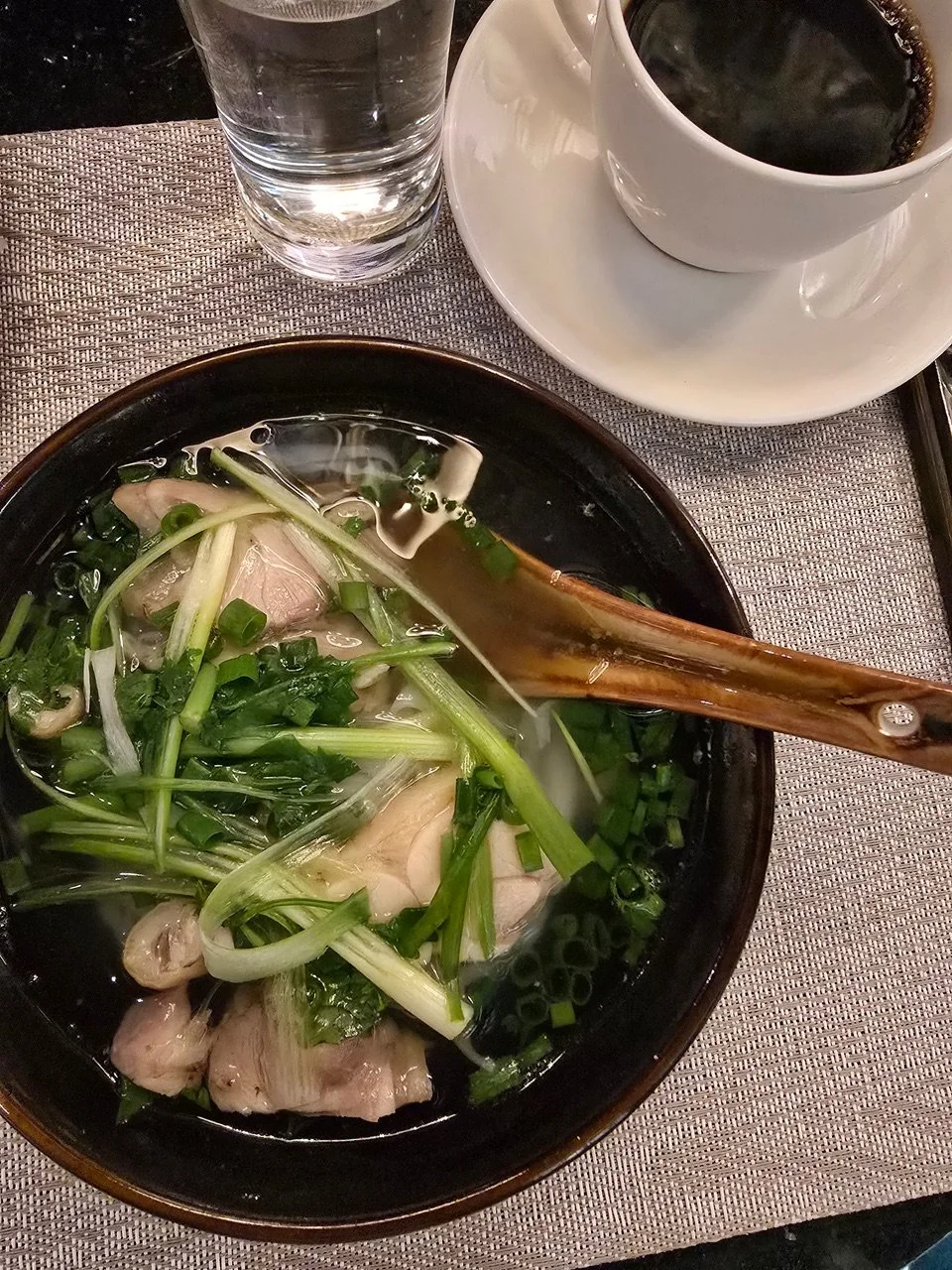
When anyone asked what I was most looking forward to about Vietnam, my honest answer was always the same: the food. Pho, specifically. I couldn't wait to eat it every single day.
Before I even left, my Instagram had been filling up with hydration-focused food content. Not just drink more water, but eat it. Broth. Cucumber. Zucchini. The idea that what's on your plate is working as hard as what's in your glass, for your gut, your energy, your skin. It was making a lot of noise. So landing in Vietnam, where I proceeded to eat broth at least once a day, felt very timely.
In so many parts of the world, food has never stopped being the centre of life. Not consumption. Not convenience. Not something you inhale between meetings. Watching Vietnamese people pull up a tiny plastic stool, squat over a small bowl of rice, broth and herbs, and eat with complete presence. I just love it. Nobody waddling past with a bag of chips and a Diet Coke. Just people nourishing themselves, quietly and without fuss, the way humans were always meant to eat.
Food is medicine over there. Not as a trend, not as a label on a forty dollar jar. Just as Tuesday. Ginger, turmeric, star anise, slow-simmered bones, fresh herbs. In Bali my favourite is soto ayam, golden and restorative. In Vietnam it's pho, or cháo gà, a chicken rice porridge built on fragrant broth, shredded chicken, crispy shallots and herbs. Rice paper rolls packed with more fresh produce than you thought one roll could hold. The ingredients shift. The intention doesn't.
And the flavour. Every time I asked myself why we can't replicate it at home. The herbs are grown in heat and humidity that changes them entirely. The same herb picked that morning tastes nothing like one sitting in a cool room for four days. They use rock sugar, not white. The bones are fresher, higher in collagen. Fish sauce in the right hands is a completely different ingredient. And honestly, the recipes aren't always given whole. Some things are felt, not measured. That knowledge doesn't transfer in a tutorial.
Part of it is also just how they cook. So much of what we do in the West strips moisture out of food. Grilling, roasting, frying, high heat. When food is cooked that way, its natural water content is lost and it becomes harder for the body to absorb. Moisture-rich cooking, simmering, steaming, slow cooking in broths, preserves water within the food and makes nutrients more bioavailable. Your body doesn't just need water. It needs to absorb it and hold onto it.
That's where minerals come in. Seaweed, miso, dashi, leafy greens, mineral-rich broths deliver the electrolytes your cells need to actually retain fluid rather than flush it straight through. In Japanese cooking these aren't superfoods or supplements. They're just daily staples. Miso soup in the morning. Dashi as a base for everything. The hydration is built into the way the whole meal is constructed.
About 20% of our daily fluid intake comes from food, without a wellness campaign attached. We just stopped cooking that way.
As we head into winter, it is the right time to start a pot. Chicken, rice, ginger, fish sauce, fresh herbs.
Pop it on. Nourish yourself. It really is that simple.